Kidsfit.com Blog

Current Articles | RSS Feed RSS Feed

Indoor Climbing Walls: The Benefits for Today's Youth

 
Climbing Wall
Indoor Climbing is a challenging, purposeful activity for all ages! Not only does it push the cardiovascular system, it challenges the participant's sequencing skills, executive functioning, and problem solving skills. Benefits of rock climbing include building trust and teamwork, increasing physical stamina, and strengthening bonds with peers. 
One of the great things about rock climbing is that anyone can do it. Whether it is your first time climbing or you are a pro, there is always a diverse selection of indoor climbing walls to fit the needs of every individual. Indoor rock climbing is more unique than other exercise routines since it allows users to be constantly mentally stimulated during physical exertion. It challenges the brain to make quick decisions and utilizes the participant's problem solving skills under pressure. It is a great way to get the brain functioning at high capacity, and enhance the fitness experience.
Another benefit of Indoor Rock Climbing is building trust and teamwork amongst peers. When you are placed in a situation where every decision counts, you can rely on those around you for guidance as to where to move your foot and how to scale the wall. As you move up the wall and listen to those around you to make the best move, it builds a sense of comradery and trust. Teamwork is a crucial factor in sports and learning to work together with others is a great skill that will benefit all, both in sports and in building life skills.
 
find-out-more-about-climbing-walls

Toddler Fitness: The New Generation

 
toddler fitness, daycare, climbing walls for kids
By: Debi Pillarella, M. Ed., C.P.T.
Here's the Scoop on Toddler Fitness:
Kids between the ages of two and five years old need social, physical and intellectual interaction and development. These years are often called the "building block" years, as they lay the foundation from which subsequent skills will grow. Free play, exploration, creativity, song, and exposure to a variety of experiences is critical. Ever wonder why kids at this age can't seem to sit still? They're learning about their bodies and how to control them in the space they live. Instead of resticiting this, confining them to the couch with a video game, or enrolling them in extensive structured activities, channel the energy in a positive way and watch your children soar! 
What's Hot:
Free play
Catching objects (beanbags, scarfs, playballs, etc)
Rolling objects
Bouncing a ball
Kicking a ball
Tossing/throwing a ball
Hitting a larger stationary ball (on a T) with a bat
Jumping 
Running/Walking/Jumping/Hopping/Galloping/Skipping
Walking a line
Pedaling a bike
Using imaginative or thematic play
Following sample directions
Cooperative games
Non-competitive relays and sports
Emphasis on fun and play
What's Not:
Restrictive Play
Sitting Still for long periods of time
Overuse of motorized toys
Competitive team sports
Emphasis on winning and hardpaly
Negative comments, criticizing, comparing skills of children
To gain more information on wellness for kids, A few great websites are:
www.ada.com
www.eatright.com
www.nutritionforkids.com
www.kidsfit.com 

Active Play is the New Kids Fitness

 
elliptical, active play
Kids fitness is active play! More importantly, kids fitness is active play fueled by an active imagination. Think about it: When we were young, we left home to play with neighborhood kids in the morning and didnt come home until late in the afternoon. What were we doing all day? Getting (or keeping) fit! Climbing trees, playing kick the can, building dams down at the creek, scrambling over and under rocks looking for the best hiding place, hopping through the hop scotch maze, escaping from the threat of incoming water balloons and racing to first base during a kickball game.
Contrast to today's youth: Video games, TV, endless movies, internet exploring, text messaging, facebooking, tweeting and yes even more video games. It adds up to inactive play! The point is, we as youth fitness professionals need to promote active play and self-imagination to the children we serve. While there is definately room for technology to aid in the advancement of children's health and fitness, it should be part of the stick that holds the carrot, not the carrot itself. The carrot that should lead kids to active, healthy lifestlyes is the child's imagination.
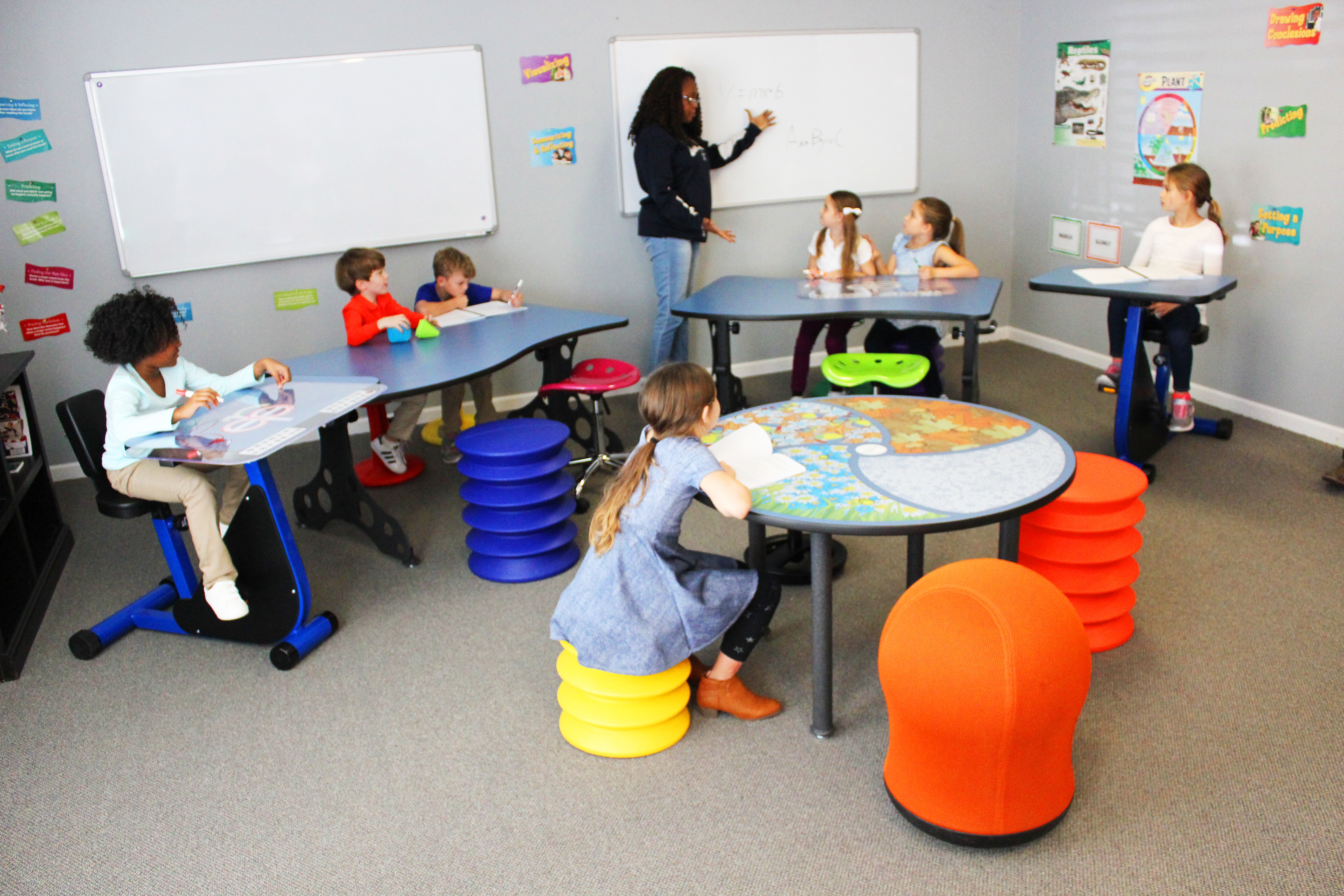
So what is our role as fitness enthusiasts? What can we do to help this process? The answer lies in bringing active play where students need it the most and where they will benefit the most. By giving them the opportunity to do what they do best, we can create an environment where they thrive. This means allowing them to move in the classroom and to exert energy while simultaneously learning. It means allowing them to write, practice math facts, and learn while their legs and arms are free to move. When the body is in motion it activates neurons that stimulate learning, retention and focus, which in turn leads to better test results and more engaged students.  For More Information on Kinesthetic Classrooms click here!
active play, jumping, jumping jacks

Exercise Leads to Better Brain Function


If you have not read Gretchen Reynolds articles for the NY Times (April 18, 2012)- do so! Here is a summary:


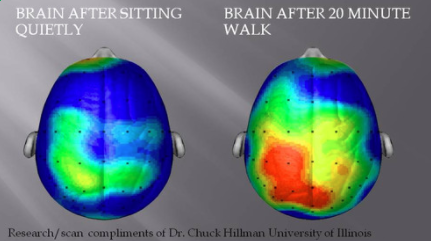
We have all heard about the beneficial relationship between physical activity and brainpower; but to what extent does this link hold true? According to researchers at the Beckman Institute this relationship is profound. Recently scientists have proven that there is both a decrease in physical shrinkage of the brain and an increase in the brain’s cognitive flexibility, in individuals who exercise on a regular basis. According to the latest neuroscience findings, exercise does even more than thinking does to boost your brainpower!

Kidsfit Skier

            In order to further support these findings, a psychology professor at the Beckman Institute for Advanced Science & Technology at the University of Illinois, set up 4 groups of mice and placed them into 4 unique environments. Before the experiment, each mouse was tested using a series of cognitive tests where the researchers even injected them with a substance that tracked changes in brain activity of the mice.  In the first cage the mice were provided with lavish food and flavored water, brightly colored toys, mirrors and plastic tunnels. In the second cage, the mice were also given these luxuries plus running wheels in their cage. The third group of mice was given ordinary food and they were given nothing special in terms of toys and extras. The fourth group’s home only had running wheels with no special food or play items.  The mice were allowed to freely play, rest, eat, etc depending on the type of cage they were in for several months. At the end, the researchers ran the same cognitive tests on the mice and also examined their brain tissues. The results were amazing. According to Rhodes, only one thing mattered; “and that’s whether they had a running wheel.” Rhodes concluded that the mice that had exercised, no matter what their surrounding environment was like, had healthier brains and achieved higher results on cognitive tests than the other mice. Rhodes stated that although the mice enjoyed the toys and enriched environments, none of that mattered if they did not exercise. In other words, unless they choose to exercise they did not increase their brainpower.

            Since the brain is like all other muscles and organs, it will decline with age and underuse. Engaging in physical activity has been proven to slow this process and reverse this breakdown in the same way it does with our muscles. For more information on the correlation between exercise and elementary age students, check out our research section! 


Kidsfit Varsity One Stepper


Community Kids Fitness By David Limpus


As youth fitness professionals, we are concerned about the escalating problems of youth obesity. We are equally frustrated with the lack of real concrete solutions within our communities. The medical community has often taken the simple "eat less and exercise more" attitude- but what can we as professionals do to make a difference where we live and work? How can we involve the medical community in our mission to help kids start active healthy lifestyles?

youth fitness recovery board

One company that is focused on building a successful community model is Commit To Get Fit. By providing a complete turn key solution for the community stakeholders they have been able to develop a successful system that gives parents, children, educators, and the medical community a way to make a dramatic impact on kid's fitness levels! Through a State of Tennessee Diabetes grant, Commit To Get Fit has joined forces with Baptist Sports Medicine, St. Thomas Health Services and Healthways (a national disease management company) to create a medical protocol for those children who are diabetic, pre-diabetic and are above the 95th percentile of BMI (Body Mass Index). The program combines a medical intervention program with a youth fitness and wellness education program that may include a physician.

The Commit To Get Fit program can include a youth strength and cardio circuit, interactive youth game equipment, and climbing walls. These physical activities combined with fitness and nutrition curriculum gets kids moving and teaches healthy habits along the way. A reward program allows participants to earn points as they improve their health and cash those points in for prizes. In addition, the program includes a community youth fitness video series that teaches parents how to help get their kids fit. The one minute health tips are aired on local cable and network channels to reach those parents who are seeking ways to make a healthier lifestlye change for their family.

This video series not only reaches parents who can make the necessary lifestyle changes at home, but it also creates a "Call to Action" which markets the program within the community.Kids Fitness Equipment for the Home Moonwalker

According to the President of Commit To Get Fit LLC, David Limpus, "The Commit to Get Fit program is not an obesity program. It is a program for all kids, ages 6 to 18 years of age. We do not call it a youth obesity program; we call it a youth fitness program. No matter how out of shape kids are, they do not want to be part of an obesity program. We get all the kids fit no matter how out of shape they are."

Kids Fitness: Energizing Brain Breaks


kids fitness, brain breaks, fitness, classroom,

Brain Breaks are quick periods of time where students will be able to re-energize and re-focus their mind in the classroom. 

Here are 2 easy games to get your students engaged in learning!

"Gnarly Knees!"

1. Have all the students stand up and hold their ears with thir hands.

2. Instruct the students to touch their left knee with their right elbow.

3. Then have the students touch their right knee with their left elbow.

Repeat this series 4 times.


"The Tilt-a-Whirl!"

1. Have the students find a piece of paper or a notebook and stand up.

2. Have each student hold out their right hand and place the piece of paper on it.

3. Instruct students to move the paper around their waist while keeping it at a level height. They are not allowed to grab the paper.

4. Continue to keep the paper at eye level and move it so it travels all the way around the body. Repeat this 3 times. To make it more challenging try it faster. 


Try these Brain Breaks in the classroom when your students need to be energized and they will be re-focused and ready to learn in no time! 

International Youth Fitness


The Benefits of Kids Fitness


Researchers Kathryn L. King, MD and Carly J. Schaholl, DO, pediatric residents at the Medical University of South Carolina Children's Hospital, sought to determine how implementing a daily physical activity program that incorporated classroom lessons would affect student achievement. First- through sixth- graders at an academically low scoring elementary school in Charleston, S.C., took part in the program 40 minutes a day, five days a week. Prior to initiation of the progrsm, students spent 40 minutes per week in physical education classes.

The results showed that the time spent out of a traditional classroom in order to increase physical education did not hurt students' academic achievement. In fact, student test scores improved. Specifically, the percentage of students reaching their goal on the state tests increased from 55 percent before the program was initiated, to 68.5 percent after the program was initiated.

"These data indicate that when carefully designed physical education programs are put into practice, children's academic achievement does not suffer," Dr. King said.

"More studies are needed," Dr. Scahill added, "but there is growing substantial evidence that this kind of physical activity may help improve academic behavior, cognitve skills and attitudes."

The above story is prerinted (with editorial adaptations by ScienceDaily staff) from materials provied by American Academy of Pediatrics, via EurekAlert!, a service of AAAS.

KIDS FITNESS EQUIPMENT, KIDS FITNESS, SNOWBOARDER

All Posts